The Post-Apocalyptic Imaginary in Contemporary Fiction
Abstract
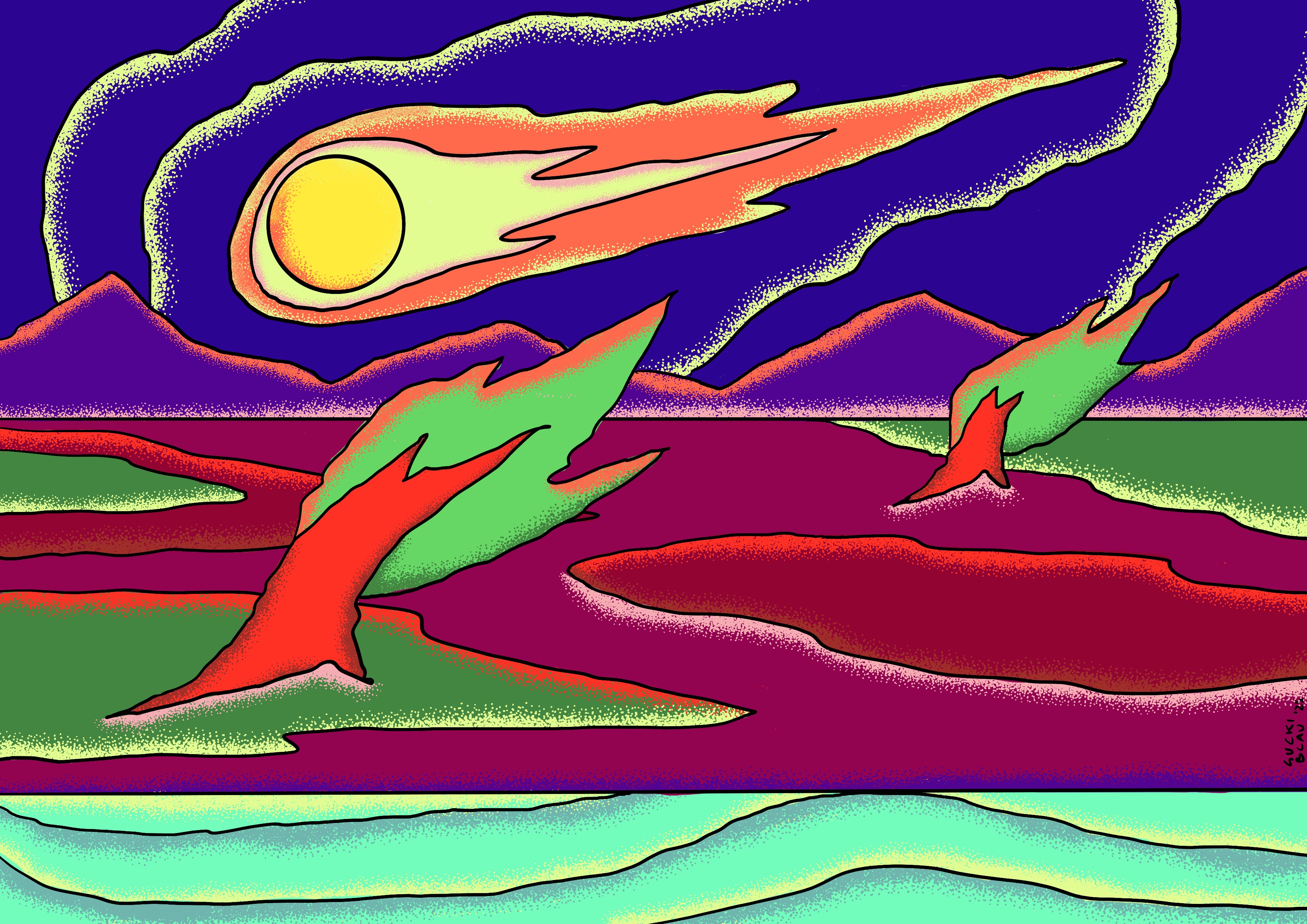
The issue After the Catastrophe: Contemporary Post-Apocalyptic Narratives explores post-apocalyptic, science-fictional, and eco-dystopian production from the past two decades, examining the representation of the ‘after-the-catastrophe’ world through the ways in which it interrogates and reconfigures the three fundamental coordinates of time, space, and subjectivity.
Downloads
References
Berardi, Franco “Bifo”, After the Future, Oakland, AK Press, 2011.
Caracciolo, Marco, Contemporary Fiction and Climate Uncertainty. Narrating Unstable Futures, London, Bloomsbury Academic, 2022.
Chakrabarty, Dipesh, The Climate of History in a Planetary Age, Chicago, University of Chicago Press, 2021.
Chute, Hillary L., Disaster Drawn: Visual Witness, Comics, and Documentary Form, Cambridge (MA), Harvard University Press, 2016.
Colebrook, Claire, Death of the PostHuman: Essays on Extinction, Vol. 1, Ann Arbor, Open Humanities Press, 2014.
Cvetkovich, Ann, Depression: A Public Feeling, Durham, Duke University Press, 2012.
De Cristofaro, Diletta, The Contemporary Post-Apocalyptic Novel, London, Bloomsbury, 2020.
Didi-Huberman, Georges, Survivance des lucioles (2009), trad. it. Come le lucciole. Una politica della sopravvivenza, Torino, Bollati Boringhieri, 2010.
Earle, Harriet E. H., Comics, trauma, and the new art of war, Jackson (MI), University Press of Mississippi, 2017.
Edelman, Lee, No Future: Queer Theory and the Death Drive, Durham, Duke University Press, 2004.
Engélibert, Jean-Paul, Apocalypses sans royaume: Politique des fictions de la fin du monde, XXe-XXIe siècles, Paris, Classiques Garnier, 2013.
Engélibert, Jean-Paul, Fabuler la fin du monde: La puissance critique des fictions d’apocalypse, Paris, La Découverte, 2019.
Fisher, Mark, “What Is Hauntology”, Film Quarterly, 66.1 (2012): 16-24.
Fisher, Mark, Ghosts of My Life: Writings on Depression, Hauntology and Lost Futures, Winchester, Zero Books, 2013.
Fisher, Mark, Capitalist Realism: Is There No Alternative? (2009), trad.it. Realismo capitalista, Roman, Nero, 2018.
Freeman, Elizabeth, Time Binds: Queer Temporalities, Queer Histories, Durham, Duke University Press, 2010.
Frezza, Gino, Endoapocalisse. The Walking Dead, l’immaginario digitale, il post umano, Cava de’ Tirreni (SA), Area Blu Edizioni, 2015.
Ghosh, Amitav, The Great Derangement (2016), trad. it. La grande cecità. Il cambiamento climatico e l’impensabile, Vicenza, Neri Pozza, 2017.
Halberstam, Jack, In a Queer Time and Place: Transgender Bodies, Subcultural Lives, New York, New York University Press, 2005.
Haraway, Donna, When Species Meet, Minneapolis – London, University of Minnesota Press, 2007.
Haraway, Donna, Staying with the Trouble. Making Kin in the Chthulucene (2016).
Hartog, François, Chronos: The West Confronts Time, translated by S. R. Gilbert, New York, Columbia University Press, 2022.
Hartog, François, Régimes d’historicité: Présentisme et expériences du temps, Paris, Seuil, 2003.
Heise, Ursula K., Sense of Place and Sense of Planet: The Environmental Imagination of the Global, Oxford, Oxford University Press, 2008.
Ingold, Tim, The Rise and Fall of Generation Now, Cambridge, Polity, 2024; trad. it., Il futuro alle spalle. Ripensare le generazioni, Ed. Nicola Perullo, Milano, Meltemi, 2024.
James, Erin, Narrative in the Anthropocene, Columbus, The Ohio State Uni- versity Press, 2022.
Kermode, Frank, The Sense of and Ending: Studies in the Theory of Fiction, Oxford, Oxford University Press, 1966.
Latour, Bruno, Face à Gaïa. Huit conférences sur le nouveu régime climatique, Paris, La Découverte, 2015.
Lino, Mirko, L’Apocalisse postmoderna tra letteratura e cinema. Catastrofi, oggetti, metropoli, corpi, Firenze, Le Lettere, 2014.
Malvestio, Marco, Raccontare la fine del mondo: Fantascienza e Antropocene, Roma, Nottetempo, 2021a.
Malvestio, Marco, “Sognando la catastrofe. L’eco-distopia italiana del ventunesimo secolo”, Narrativa, 43 (2021b): 31-44.
Micali, Simona, Creature. La costruzione dell’immaginario postumano tra mutanti, alieni, esseri artificiali, Milano, Shake, 2022.
Morton, Timothy, Hyperobjects. Philosophy and Ecology after the End of the World, Minneapolis, University of Minneapolis Press, 2013.
Orlando, Francesco, Gli oggetti desueti nelle immagini della letteratura. Rovine, reliquie, rarità, robaccia, luoghi inabitati e tesori nascosti (1993), Torino, Einaudi, 2015.
Preciado, Paul B., Dysphoria Mundi, Roma, Fandango, 2022.
Ricoeur, Paul, Temps et Récit (1985), Eng. tr. Time and Narrative, Volume 2, by Kathleen Blamey and David Pellauer, Chicago, Chicago University Press, 1988.
Ryan, Marie-Laure, A New Anatomy of Storyworlds. What Is, What If, As If, Columbus, The Ohio State University Press, 2022.
Scaffai, Niccolò, Letteratura e ecologia. Forme e temi di una relazione narrativa, Roma, Carocci, 2017.
Scaffai, Niccolò (ed.), Racconti del pianeta terra, Torino, Einaudi, 2022.
Scaffai, Niccolò, Sotto l’inesauribile superficie delle cose. Il paradigma della profondità nell’immaginario dell’Antropocene, Sansepolcro, Aboca, 2025.
Scaffai, Niccolò, “Apocalissi borghesi. Ecologia e vita individuale nel romanzo italiano contemporaneo”, Italian Studies, 80 (2025a): 47-60.
Sturli, Valentina, “Catastrofi ecologiche e tecnologiche: i paesaggi e gli oggetti straniati nelle post-apocalissi contemporanee”, Status Quaestionis, 22 (2022): 393-411.
Thacker, Eugene, In the Dust of This Planet: Horror of Philosophy Vol. 1, Winchester, Zero Books, 2011.
Trexler, Adam, Anthropocene Fictions: The Novel in a Time of Climate Change, Charlottesville, University of Virginia Press, 2015.
Vermeulen, Pieter, Literature and the Anthropocene, London - New York, Routledge, 2020.
Watsuji, Tetsurô, Fûdo: Ningengakuteki Kôsatsu (1935), trad. it. Vento e terra. Uno studio dell’umano; Milano-Udine, Mimesis, 2014.
Copyright (c) 2025 Elisabetta Abignente, Claudia Cao, Claudia Cerulo

This work is licensed under a Creative Commons Attribution 4.0 International License.
Copyright Notice
You are free to copy, distribute and transmit the work, and to adapt the work. You must attribute the work in the manner specified by the author or licensor (but not in any way that suggests that they endorse you or your use of the work).