Gloomy Islands and Mass extinctions. The playful disasters of Éric Chevillard
Abstract
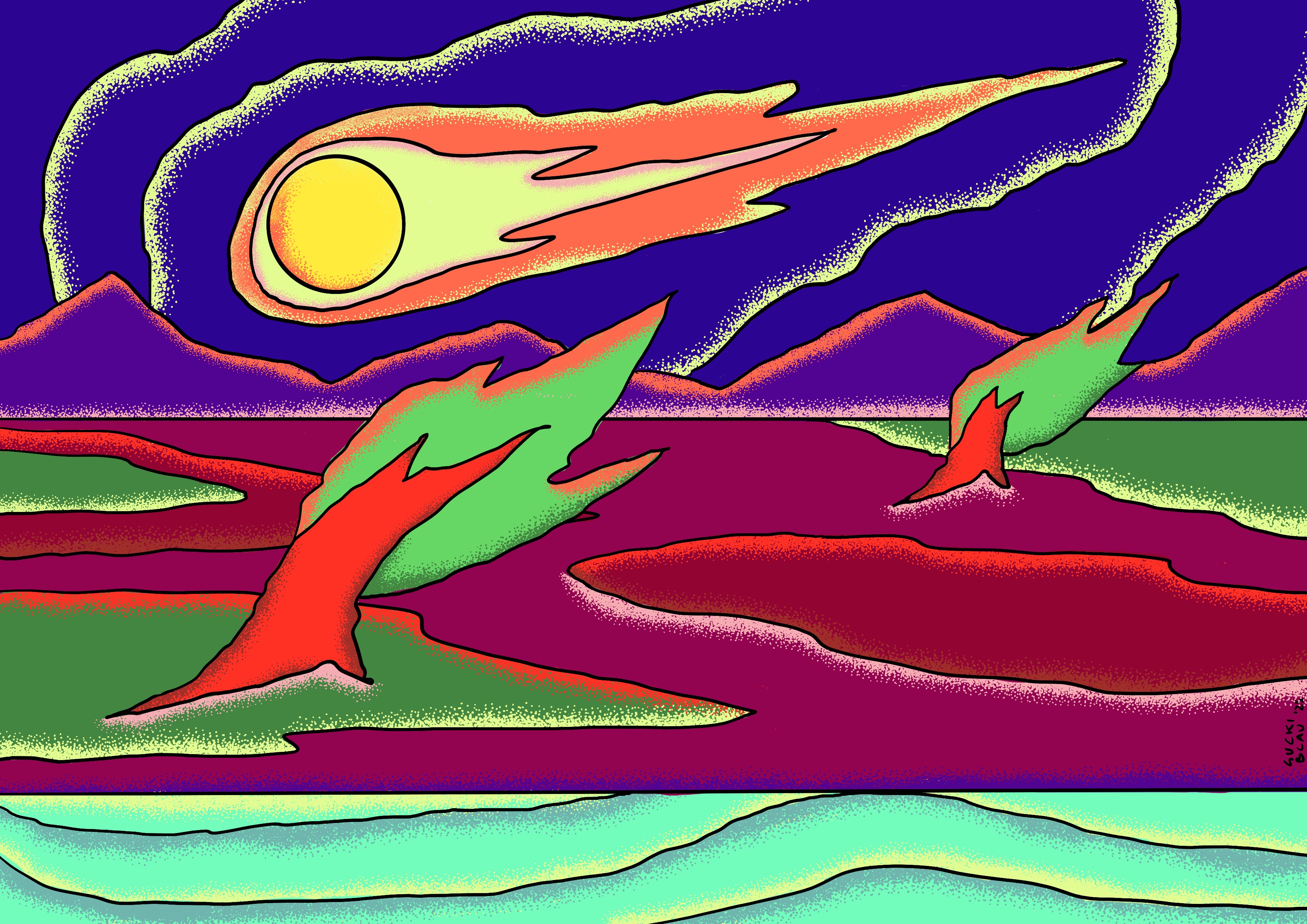
After pointing out the theoretical difference between apocalyptic and post-apocalyptic novels, the article looks at 21st-century French literature that has tackled the theme of a post-disaster world. The analysis identifies the most compelling examples of this dystopian trend in the works of experimental authors who, over recent decades, have cultivated an ironic and playful approach to post-apocalyptic narrative. To illustrate the concept of “playful catastrophe”, a framework particularly apt for these works, the article then focuses on Éric Chevillard’s novel Sans l’orang-Outan (2007) and Choir (2010), a bizarre post-apocalyptic diptych.
Downloads
References
Anders, Günther, Le Temps de la fin, traduit par François L’Yvonnet, Paris, L’Herne, 2007.
Balibar, Françoise – Lombardo, Patrizia – Roger, Philippe, « Penser la catastrophe », Critique, vol. 783-784.8, (2012): 627-630, https://doi.org/10.3917/criti.783.0627.
Beck, Ulrich, La società del rischio. Verso una seconda modernità, trad. Walter Privitera, Roma, Carocci, 2005.
Benedetti, Carla, La letteratura ci salverà dall’estinzione, Torino, Einaudi, 2021.
Bessard-Banquy, Olivier, Le roman ludique : Jean Echenoz, Jean-Philippe Toussaint, Éric Chevillard, Villeneuve d’Ascq, Presses universitaires du Septentrion, 2003.
Bessard-Banquy, Olivier, L’industrie des lettres, Paris, Pocket, 2012.
Bessonnet, Jodie-Lou, « “It is my business”. La sixième extinction massive, catastrophe mondiale et deuil intime dans Sans l’orang-outan d’Éric Chevillard et How the Dead Dream de Lydia Millet », Épistémocritique, 24, 2024, https://epistemocritique.org/3-it-is-my-business-la-sixieme-extinction-massive-catastrophe-mondiale-et-deuil-intime-dans-sans-lorang-outan-deric-chevillard-et-how-the-dead-dream/ (consulté le 21/09/2025).
Brand, Philippe, « Comment parler après la fin ? Zone one et Sans l’orang-outan », dans Jean-Paul Engélibert, Raphaëlle Guidée, Catherine Coquio (dir.), L’Apocalypse. Une imagination politique (xixe-xixe siècles), Rennes, Presses universitaires de Rennes, 2018: 221-229.
Camus, Audrey, « Choir avec Chevillard : la lecture comme exercice utopique », Revue d’histoire littéraire de la France, 115.2 (2015): 421-434, https://doi.org/10.3917/rhlf.152.0421.
Cazaban-Maserolles, Marie, « L’écologie poétique profonde d’Éric Chevillard », Revue critique de fixxion française contemporaine, 11, 2015, URL : http://journals.openedition.org/fixxion/8659 (consulté le 15/04/2025).
Chevillard, Éric, Choir, Paris, Minuit, 2010.
Chevillard, Éric, « Le ciel des ursidés », dans Feuilleton. Chroniques pour Le Monde des livres (2011-2017), Genève, La Baconnière, 2018c: 123‑124.
Chevillard, Éric, « Au sortir du paillasson », dans Feuilleton. Chroniques pour Le Monde des livres (2011-2017), Genève, La Baconnière, 2018b: 115‑116.
Chevillard, Éric, « En parlant du loup », dans Feuilleton. Chroniques pour Le Monde des livres (2011-2017), Genève, La Baconnière, 2018a: 45-46.
Chevillard, Éric, « L’humour du désastre », dans Feuilleton. Chroniques pour Le Monde des livres (2011-2017), Genève, La Baconnière, 2018d: 267‑268.
Chevillard, Éric, « Des leurres ou des hommes de paille : entretien avec Pascal Riendeau », Roman 20-50, 46.2 (2008): 11-22, https://doi.org/10.3917/r2050.046.0011.
Chevillard, Éric, L’Auteur et moi, Paris, Minuit, 2012.
Chevillard, Éric, « Le monde selon Crab : entretien avec Richard Robert », Les Inrockuptibles, 47, 1993, URL : https://www.eric-chevillard.net/e-inrocks1993.html (consulté le 22/04/2024).
Chevillard, Éric, Sans l’orang-Outan, Paris, Minuit, 2007.
De Cristofaro, Diletta, The Contemporary Post-Apocalyptic Novel. Critical Temporalities and the End Times, London, Blomsbury Academic, 2020.
Engélibert, Jean-Paul, Apocalypses sans royaume Politique des fictions de la fin du monde, xxe-xxie siècles, Paris, Classiques Garnier, 2013.
Gefen, Alexandre, Réparer le monde. La littérature française face au xxie siècle, Paris, Corti, 2021 (2017).
Hartog, François, « L’apocalypse, une philosophie de l’histoire ? », Esprit, vol. 6, Paris, Éditions Esprit, 2014: 2232, https://doi.org/10.3917/espri.1406.0022.
Hobsbawm, Eric, The Age of Extremes. A History of the World (1914-1991), New York, Pantheon Books, 1995.
Jourde, Pierre, Empailler le toréador. L’incongru dans la littérature française de Charles Nodier à Éric Chevillard, Paris, José Corti, 1999.
Kermode, Frank, The sense of an Ending. Studies in Theory of fiction, Oxford, Oxford University Press, 1967.
Latour, Bruno, Face à Gaïa. Huit conférences sur le nouveu régime climatique, Paris, La Découverte, 2015.
Letessier, Anne-Sophie – Chapuis, Sophie, « Introduction », Épistémocritique (En ligne), vol. 24, 2024, URL : https://epistemocritique.org/representer-la-catastrophe-au-xxieme-siecle-pratiques-et-enjeux-contemporains-sommaire-et-introduction/ (consulté le 06/04/2025).
Maccherini, Mario, « Le présent impossible ou le ton apocalyptique dans Choir d’Éric Chevillard », dans Dominique Viart, Gianfranco Rubino (dir.), Écrire le présent, Armand Colin, 2013: 231-242.
Piguet, Raphaël, « Chevillard à fleur de peau », Critique, vol. 855856 / 8, Paris, Éditions de Minuit, 2018: 732746, https://doi.org/10.3917/criti.855.0732.
Raczymow, Henri, La mort du grand écrivain. Essai sur la fin de la littérature, Paris, Stock, 1994.
Roche, Anne, « Rêveur, rageur », Revue critique de fixxion française contemporaine, 1, 2010, https://doi.org/10.4000/fixxion.4120.
Rumpala, Yannick, « Que faire face à l’apocalypse ? Sur les représentations et les ressources de la science-fiction devant la fin d’un monde », Questions de communication, 30.2 (2016): 309-334.
Saramago, José, Ensaio sobre a Cegueira, Lisboa, Caminho, 1999.
Saramago, José, Ensaio sobre a Lucidez, Lisboa, Caminho, 2004.
Viart, Dominique – Vercier, Bruno, La littérature française au présent. Héritage, modernité, mutations, Paris, Bordas, 2008.
Volodine, Antoine, Le post-exotisme en dix leçons, leçon onze, Paris, Gallimard, 1998.
Copyright (c) 2025 Alessandro Grosso

This work is licensed under a Creative Commons Attribution 4.0 International License.
Copyright Notice
You are free to copy, distribute and transmit the work, and to adapt the work. You must attribute the work in the manner specified by the author or licensor (but not in any way that suggests that they endorse you or your use of the work).