Combining memory and contemporary art. From living art to the aestheticisation of a historic centre: the case of Maria Lai in Aggius
Abstract
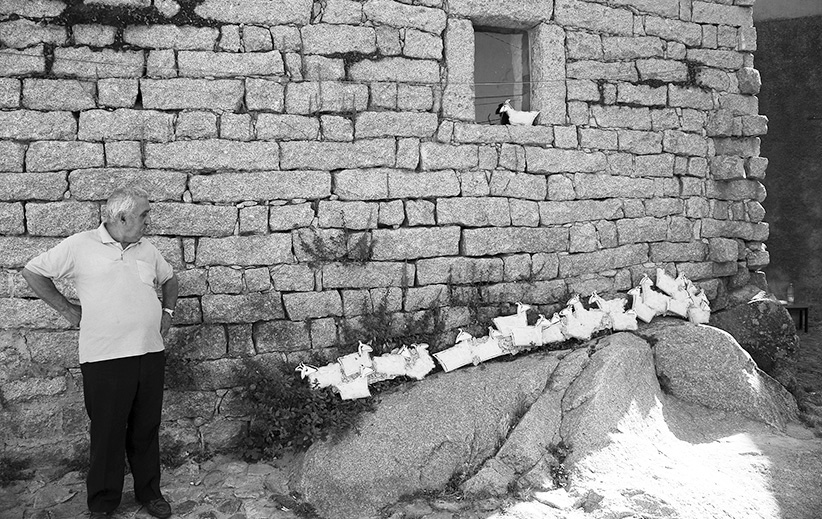
This essay aims to tell the story of an intriguing experiment that took place in a small town in northern Sardinia: Aggius. The purpose of this account is to invite reflection on the paradoxical effects of ambiguity that a significant urban regeneration project—one based on heritage preservation and capable of combining memory and contemporary art—can produce if sacrificed on the altar of tourism. What we intend to recount is a story that shows us precisely how the long-standing structures and memorial heritage that characterize the uniqueness of a small historic town can, on the one hand, trigger—through a recombination of tradition and innovation—an interesting process of collective reappropriation of the heritage of a territory’s history and traditions; on the other hand, simultaneously become elements that generate a process of “intensive exploitation of specific resources, formed by deposits accumulated over time” (Boltanski, Esquerre, 2019, p. 77), which risks, if not carefully managed, taking on trivializing and commodifying traits.
Downloads
Copyright (c) 2026 Lidia Decandia

This work is licensed under a Creative Commons Attribution 4.0 International License.
Authors who publish with this journal agree to the following terms:
- Authors retain copyright and grant the journal right of first publication with the work simultaneously licensed under a Licenza Creative Commons - Attribution 4.0 International (CC-BY 4.0) that allows others to share the work with an acknowledgement of the work's authorship and initial publication in this journal.
- Authors are able to enter into separate, additional contractual arrangements for the non-exclusive distribution of the journal's published version of the work (e.g., post it to an institutional repository or publish it in a book), with an acknowledgement of its initial publication in this journal.
- Authors are permitted and encouraged to post their work online (e.g., in institutional repositories or on their website) after the publication, as it can lead to productive exchanges, as well as earlier and greater citation of published work.